
Why Is My HVAC System Running Constantly?
The sound of your heating and cooling system kicking on is usually a sign that comfort is on the way. You hear the hum of the motor and feel the change in temperature, and then, after a short while, silence returns. This cycle of running and resting is the normal rhythm of a healthy HVAC system. It is designed to run until the thermostat setting is met and then shut down to conserve energy. When that silence never comes, it is a cause for concern. A furnace or air conditioner that runs without stopping is not just a nuisance that creates white noise in the background. It is a clear signal that something is wrong with the efficiency or the mechanical integrity of your system.
Homeowners in Chesterfield often notice this issue first when they open their monthly utility bill. A system that runs nonstop is consuming electricity or gas at an alarming rate. The second sign is often a disparity in comfort. Despite the system running all day and night, the home may still feel too hot in the summer or drafty in the winter. This indicates that the unit is working harder but accomplishing less. Ignoring a constantly running system is a gamble that usually results in a complete mechanical breakdown. The components are not engineered for perpetual motion. They need rest cycles to dissipate heat and reduce wear. Understanding why your system is stuck in this overdrive mode is the first step toward fixing it and restoring sanity to your energy bills.
Restricted Airflow Caused by Dirty Filters
The most common reason an HVAC system runs continuously is also the simplest one to fix. It is almost always an issue with airflow. Your furnace and air conditioner rely on a steady, unimpeded stream of air to function. The air filter is the gatekeeper of this airflow. Its job is to trap dust, pollen, and debris before they can enter the system and damage the sensitive internal components. Over time, this filter becomes saturated with the particulate matter it collects. If it is not replaced regularly, it transforms from a protective shield into a solid wall that blocks air from passing through.
When the filter is clogged, the blower motor has to work significantly harder to pull air from your home into the system. The reduced volume of air moving over the heat exchanger or the evaporator coil means the system cannot effectively change the temperature of the air. In the summer, the air conditioner cannot remove heat fast enough. In the winter, the furnace cannot push enough warm air out to raise the room temperature. The thermostat senses that the target temperature has not been met, so it continues to send the signal for the system to run. The unit will keep grinding away, straining against the blockage, in a futile attempt to satisfy the thermostat.

This situation creates a destructive cycle. The longer the system runs against a clogged filter, the hotter the internal motors become. This can lead to the blower motor burning out or the limit switch tripping due to excessive heat. For an air conditioner, the lack of airflow can cause the indoor coil to freeze into a block of ice, which further blocks airflow and forces the compressor to run until it fails. Checking your filter is the absolute first step in troubleshooting a system that will not shut off. If it looks gray, matted, or dusty, replacing it usually solves the problem immediately.
Incorrect Thermostat Settings or Failure
Sometimes the problem is not with the heavy machinery outside or in the basement but with the small control panel on your wall. The thermostat is the brain of the operation. If it sends the wrong signals, the system will obey blindly. A very frequent cause of a constantly running fan is the fan setting switch. Most thermostats have two settings for the fan which are “ON” and “AUTO.” When the switch is set to “AUTO,” the fan will only run when the furnace or air conditioner is actively heating or cooling the air. When the cycle is done, the fan turns off.
Need a thermostat install? Click here for our thermostat install service.
If the switch is accidentally bumped or set to “ON,” the blower fan will run twenty four hours a day, regardless of the temperature in the house. You might hear the air moving and assume the AC or furnace is running nonstop, but it might just be the fan circulating room temperature air. This creates a wind chill effect in the winter that makes you feel colder, and it pushes humidity back into the home in the summer. Checking this switch is a simple diagnostic step that can save you a significant amount of money on electricity.
Beyond the fan setting, the thermostat itself can fail. If the temperature sensor inside the unit breaks or loses calibration, it may register the room temperature incorrectly. It might think the room is eighty degrees when it is actually seventy, causing the air conditioner to run endlessly to try to lower a temperature that does not exist. Wiring issues behind the unit can also cause the circuit to stay closed, forcing the system to run. Even low batteries in a digital thermostat can cause it to behave erratically and send confused signals to the HVAC unit. If verifying the settings does not stop the running, the thermostat hardware likely needs professional inspection.
Leaky or Disconnected Ductwork
Your HVAC system generates heated or cooled air, but that air is useless if it does not reach the living spaces of your home. The network of ducts that snakes through your walls, attic, and crawlspace is the delivery system. In many homes, particularly older ones in the Chesterfield area, this ductwork can develop leaks, holes, or loose connections over time. Seals dry out and tape peels away. Sometimes, entire sections of duct can become disconnected due to settling or accidental bumps during attic storage.
When there are significant leaks in the supply ducts, the air that you paid to heat or cool escapes into unconditioned spaces. You might be cooling your attic to a comfortable temperature while your living room remains sweltering. Because the conditioned air is lost before it reaches the interior vents, the thermostat in your hallway never registers a change in temperature. It continues to tell the system to run because the job is not done. The system is working perfectly, but the delivery method is broken.

Leaks in the return ducts are equally problematic. These leaks suck in hot, humid air from the attic in the summer or freezing cold air in the winter and pull it into the system. This adds a massive extra load to the furnace or air conditioner. It has to work twice as hard to condition this extreme air compared to the relatively mild air it should be pulling from inside your house. This forces the cycle to extend significantly, often leading to continuous operation as the system struggles to overcome the influx of unconditioned air. Sealing these leaks is essential for stopping the constant running and improving the overall efficiency of your home.
Dirty Coils and Lack of Maintenance
An air conditioner or heat pump operates on the principle of heat transfer. It absorbs heat from inside and releases it outside. This process relies entirely on the cleanliness of two sets of metal coils. The evaporator coil is located inside your home, and the condenser coil is located in the outdoor unit. Over time, these coils act as magnets for dust, dirt, grass clippings, and pollen. If the system does not receive annual professional maintenance, these coils will inevitably become coated in a layer of grime.
This layer of dirt acts as an insulator. It prevents the refrigerant inside the coils from effectively absorbing or releasing heat. When the outdoor condenser coil is covered in dirt and debris, it cannot release the heat it has collected from your home. The compressor has to work much harder and run for much longer periods to discharge the heat. The system is running, but it is not cooling effectively. You will notice the air coming out of your vents is not as cold as it used to be, and the unit outside never seems to shut down.
The same principle applies to the indoor coil. If it is coated in dust, it cannot absorb heat from the air. This inefficiency forces the system to run marathon cycles to lower the temperature by even a single degree. Routine maintenance is the only way to prevent this. A professional technician has the tools and chemical cleaners required to strip away this buildup without damaging the delicate aluminum fins of the coils. Keeping these heat transfer surfaces clean ensures that the system can do its job quickly and then shut off to rest.
The Unit Is the Wrong Size for the Home
It is a common misconception that a bigger HVAC system is always better. It is also a misconception that any unit will work as long as it turns on. The truth is that size matters immensely, and an improperly sized unit is a leading cause of efficiency problems. If a system is too small, or undersized, for the square footage of the home, it will never be able to keep up with the heating or cooling demands.
An undersized air conditioner might run perfectly fine on a mild spring day. However, when the high humidity and heat of a Missouri summer arrive, the unit will be overwhelmed. It will run continuously, twenty four hours a day, trying to reach the thermostat setting, but it simply lacks the capacity to remove heat fast enough. It is like trying to bail out a sinking boat with a teacup. The system will run itself into the ground, leading to early mechanical failure, and your home will never be truly comfortable.
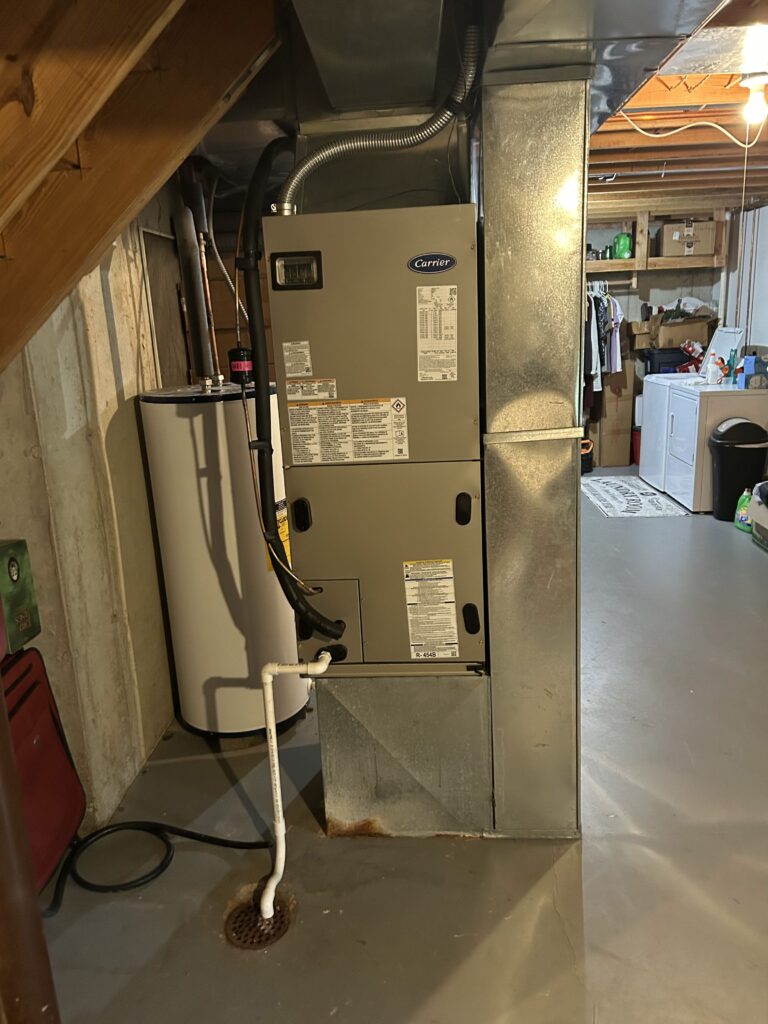
Conversely, an oversized unit can also cause issues, though it typically leads to short cycling rather than constant running. However, an oversized unit can run efficiently for short bursts but fail to remove humidity, leading to a “clammy” feeling that causes homeowners to lower the thermostat further, forcing the system to run more than necessary. Ensuring your system is correctly sized through a manual J load calculation is vital. If your system is undersized, no amount of repair will fix the constant running; the only solution is replacement with a unit that matches your home’s needs.
Low Refrigerant Levels
For air conditioners and heat pumps, refrigerant is the lifeblood of the system. It is the chemical substance that absorbs and releases heat as it travels through the coils. It is important to understand that refrigerant is not a fuel. It is not consumed like gas in a car. It circulates in a closed loop system. This means that the amount of refrigerant in your system should remain constant for its entire life. If the refrigerant level is low, it means there is a leak somewhere in the copper lines or coils.
When the refrigerant level drops, the pressure in the system drops with it. The system loses its capacity to cool the air. The air conditioner will have to run for much longer periods to achieve the same cooling effect that it used to provide effortlessly. In many cases, it will run constantly because it physically cannot lower the temperature to the set point. You might feel lukewarm air coming from the vents, which is a telltale sign of a charge issue.
Running a system with low refrigerant is incredibly damaging. The refrigerant also acts as a coolant for the compressor motor. Without enough of it, the compressor can overheat and burn out. This is often the most expensive part of the entire system to replace. Furthermore, low refrigerant often leads to the evaporator coil freezing up. A frozen coil blocks airflow completely, which, as discussed earlier, forces the system to run nonstop in a futile attempt to push air through a block of ice. If you suspect a refrigerant leak, you need a professional to locate the leak, repair it, and recharge the system to the manufacturer’s specifications.
The Impact of Extreme Weather and Insulation
Sometimes the HVAC system is running constantly not because it is broken, but because it is fighting a losing battle against the environment. Your home’s insulation and the sealing of your windows and doors define the “envelope” that holds in your conditioned air. If your home has poor insulation in the attic or walls, or if you have drafty, single pane windows, your home is constantly losing heat in the winter and gaining heat in the summer.
Furnace not turning on? Click here for more information.
During extreme weather events, such as a heat wave where temperatures stay above ninety degrees for days, or a deep freeze, your system has to work overtime to compensate for this thermal transfer. Even a perfectly functioning, correctly sized unit may run almost continuously during these extreme peaks just to maintain a safe temperature. It is fighting against the rapid loss of energy through the walls and roof.
While you cannot control the weather, improving your home’s insulation and sealing drafts can significantly reduce the load on your HVAC system. Adding insulation to the attic is one of the most cost effective ways to stop the system from running all day. It acts as a barrier that keeps the paid for air inside where it belongs. If your system struggles only during the hottest or coldest days of the year, it might be an insulation issue rather than a mechanical failure. However, if it runs constantly even during mild weather, the issue is almost certainly mechanical.
A constantly running HVAC system is a stressful problem that hits you in your wallet and your comfort. It is a clear communication from your mechanical system that something is amiss. Whether it is a simple issue like a clogged filter or a wrong thermostat setting, or a more complex problem like a refrigerant leak or failing parts, the outcome is the same. You are paying for electricity you do not need to use, and you are putting years of wear and tear on your expensive equipment in a matter of months.
Do not ignore the hum that never stops. Take the time to check your filter and your thermostat settings first. If those simple fixes do not resolve the issue, it is time to call in expert help. The team at Lolich Heating and Cooling can diagnose the root cause of the continuous operation. We can inspect your ductwork, clean your coils, check your refrigerant levels, and ensure your system is sized correctly for your home. Restoring your system to its proper cycle will lower your bills, improve your comfort, and give your hardworking furnace and air conditioner the break they deserve.